
No, I never could fill Willie’s shoes. No matter how many stockings
I put on my feet, I still couldn’t
fill Willie’s shoes….
Willie’s Shoes by Ciarán Rosney
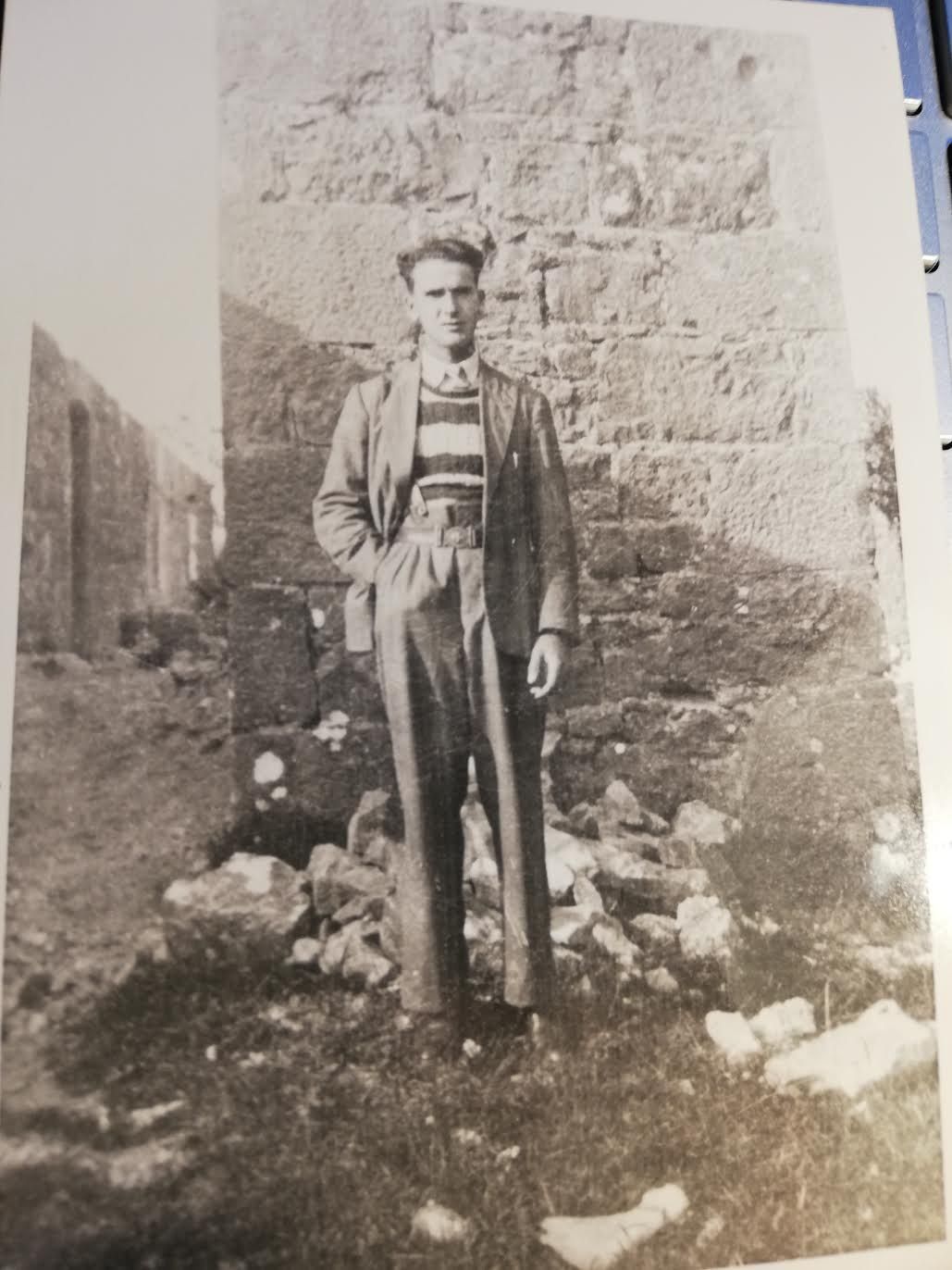
In those unenlightened times, the most that might realistically be expected of girls like my aunts Mary and Kitty was that they grow up to find husbands and have children of their own. The youngest of the five kids, Jimmy, elected to be the ‘son who stayed’ and supported my grandparents, Charley and Mary, in running and eventually taking over the family farm. And so it fell to his brothers Jack (my Dad) and Paddy to roll the dice of life far from the serene riverfront setting that was all they had ever known. No easy task in a world still reeling from the seismic impact of its second global conflagration in just over twenty years.
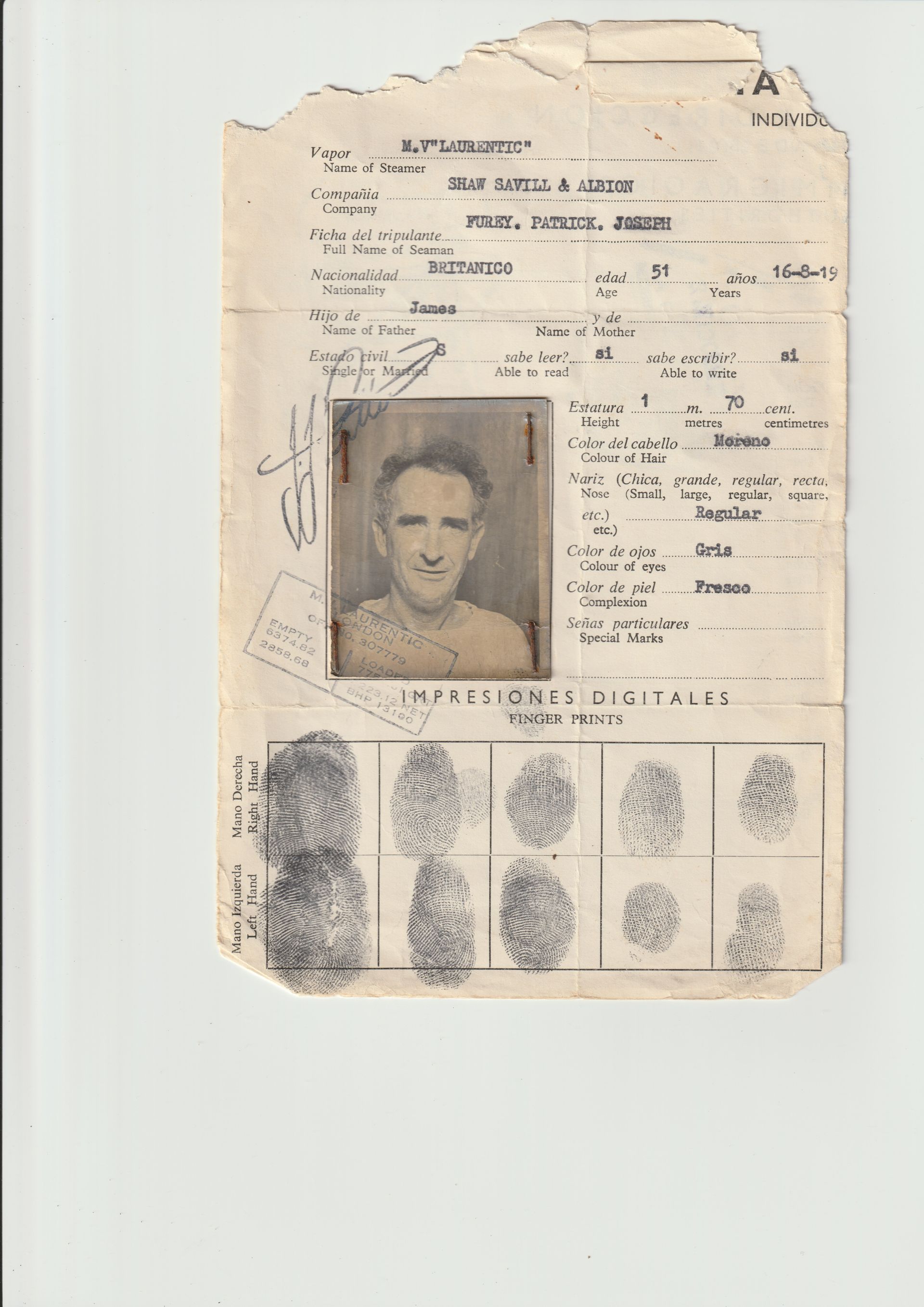
Family legend tells of how Paddy did his bit to help by running away to sea and joining the UK’s merchant navy around the start of World War II. He went on to spend the next four-and-a-half decades toiling in furnace-like engine rooms deep in the bowels of the ships in which he crisscrossed the world. What few letters of his I was able to find in Jimmy’s cottage speak of the firm friends and happy memories Paddy made on every ship and in every port of call.
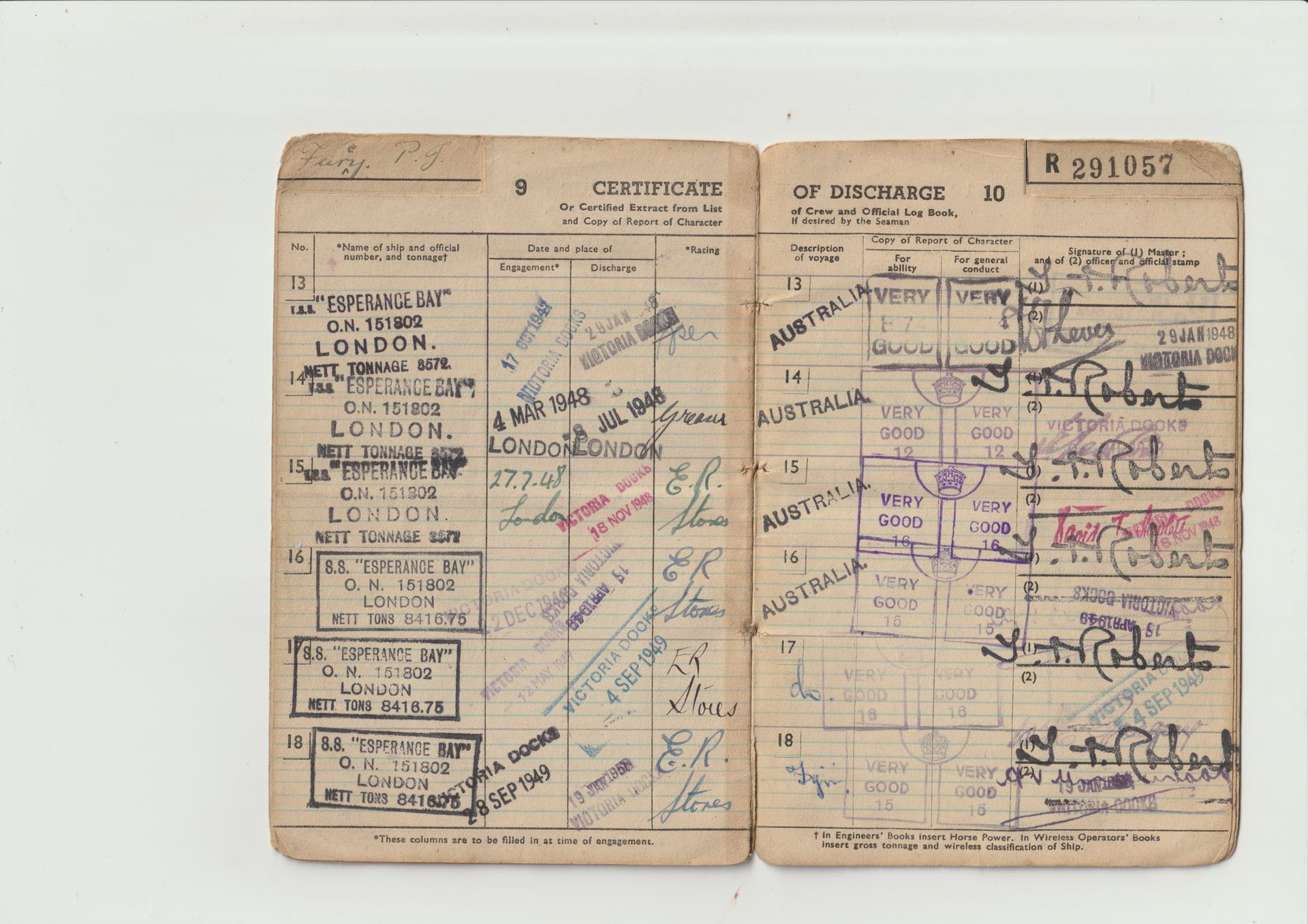
Many of Paddy’s journeys are documented in the dozen or so seaman’s service books Jimmy entrusted to me when he died four summers ago. While the passport-sized books detail where Paddy’s career took him and the ships that took him there, what they don’t – can’t – tell you are the unspeakable hardships he must have endured during wartime.
Between 1939 and 1945, 4,700 allied merchant ships were sunk by the Axis Power navies of Germany, Italy and Japan. Fully 29,000 of the brave men who risked their lives keeping vital supply lines to the UK open were lost at sea while doing so. Paddy was one of the fortunate few who made it home.
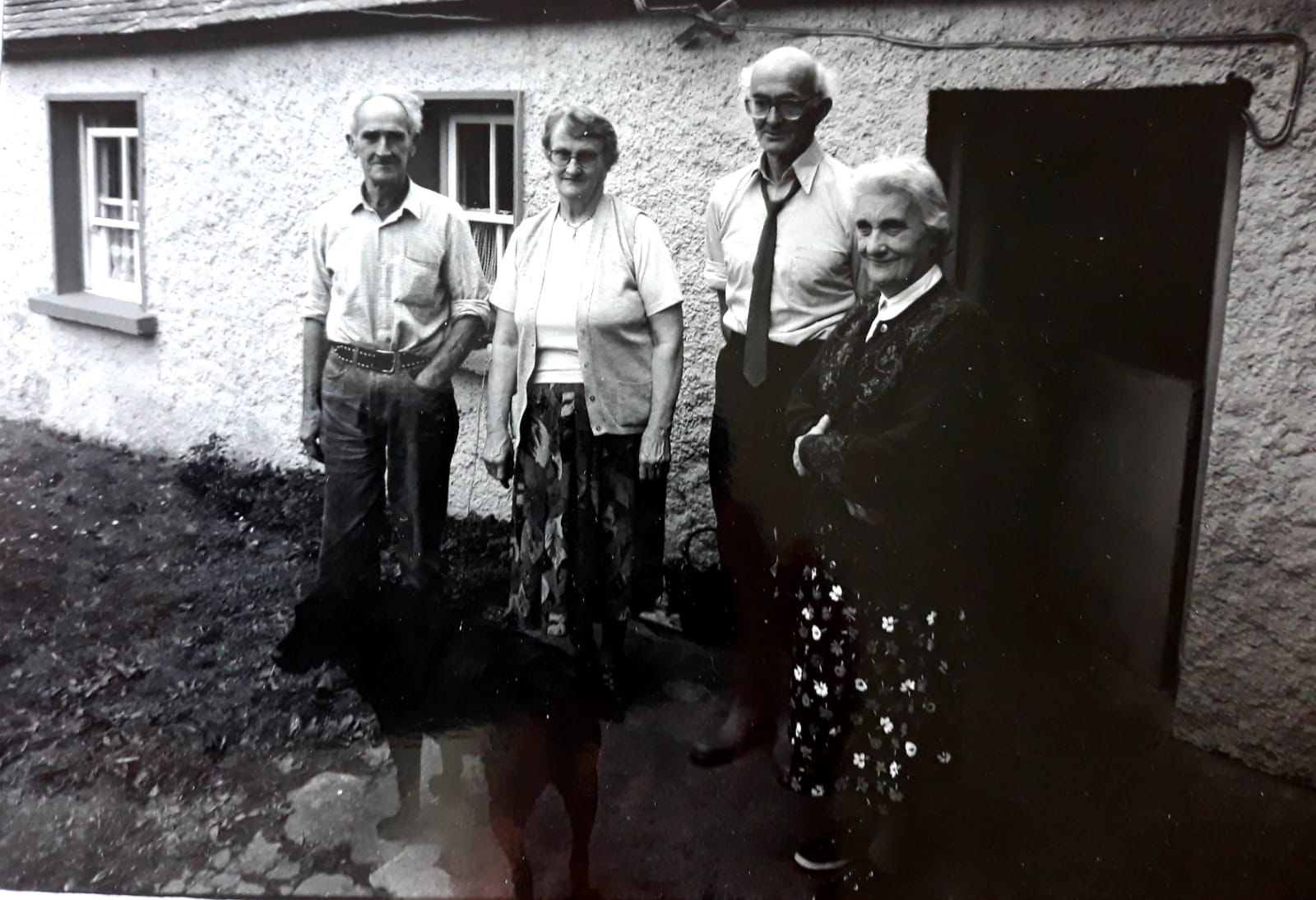
From the few facts I was able to glean from friends and neighbours who knew him far better than I ever did, it seems that Paddy was shipwrecked on at least two occasions. With Z-list celebs on reality TV shows now regularly caterwauling how some minor inconvenience has caused them incalculable emotional hardship, Post-traumatic Stress Disorder has become an unjustly devalued term. Like most men who somehow managed to survive that terrible time, Paddy rarely spoke of how close the conflagration that raged all around came close to consuming him and his shipmates. Respectful of those who had paid a far, far heavier price than he himself, he would take a sip of his pint and gently change the subject.
While my Mum, Dad, sister Mary and I would see Jimmy as regular as clockwork every summer at Mount Plunkett, Paddy was an altogether more enigmatic figure. Once in the bluest of blue moons, I’d arrive home from school and there he’d be beaming news of magical far-off places direct into our Coventry living room.
While my sister and I would have loved him regardless of whether or not he brought us souvenirs from his wanderings, Paddy never skimped on his avuncular responsibilities. Best of all, the presents he’d picked out and carried halfway around the world to place into our eager hands were invariably marvels to behold. To this day, I have never forgotten – and indeed never will forget – the beautiful brown leather-sleeved salmon and cream Panasonic transistor radios he brought home for us in the mid-1960s. The bearer of exotic-sounds from radio stations like Luxembourg and Caroline during pop’s Golden Age, Paddy’s present was my ticket to a lifetime of listening pleasure.
Equally unforgettable was his roar of laughter two decades later when I told him how the tranny he’d bought me all those years before was now accompanying me as I ventured out into the world myself. While my copywriting career eventually took me all over Africa, Asia, Europe and the Middle East, I doubt I ever saw as many places or drank as deeply of life as Paddy had. Sadly that March 1983 night in London was the last time I was privileged to hear him uncoil one of his inexhaustible stock of sailors’ yarns.
Not long after our meeting, Paddy returned to Ireland to enjoy his Autumn years in the one place in the world where he should have felt safest – the childhood cottage where he’d been born and raised. Tragically, any chance of a contented worry-free retirement was wrecked one night in the late-1990s when several local thugs on a crime spree broke in and mercilessly beat him and Jimmy. While at least one gang member was gaoled for his involvement in other local robberies that took place around the same time, no one was ever prosecuted for the vicious assaults on my poor uncles.
Jimmy and many of his and Paddy’s friends went to their graves maintaining that Paddy never really recovered from the events of that awful night. While the blows he and Jimmy suffered at the hands of the brutes who attacked them must have been agonising, bruising and scars fade over time. The wounds left by the violation of his childhood home and safe haven must have cut Paddy a million times deeper; hurt him a million times more.
And so it was, twenty five years ago this spring that Paddy weighed anchor on a journey from which not even the bravest and most skilled sailor can ever hope to return. Though forever after forced to limp because of the beating he took himself, Jimmy would live on for a further 21 years after Paddy’s death. Despite leaving some pretty big footprints in the sands of life himself, the master boatbuilder would often admiringly quote
Ciarán Rosney’s
Willie’s Shoes when recalling his much-loved and sorely missed brother.
Article by John Fuery